On a humid June morning, Maria noticed soggy patches and yellowing leaves on her front lawn even though she watered only every other day. She thought more frequent watering would help her new fescue seed, but puddles formed and fungal spots spread instead. A neighbor suggested a WiFi sprinkler controller and a soil sensor; Maria needed a plan that fixed the real problem without wasting water or money.
1. Mistake: Watering on a Fixed Calendar, Not Conditions
Problem: Many homeowners set sprinklers for fixed days and times—say, Tuesday and Friday at 6 a.m.—and never change them. That makes sense if weather and soil stayed the same, but they don’t. Heavy rains, cooler temps, or an early-season heatwave all change how much water your yard needs. The result is frequent surface runoff, pooling, and shallow root growth.
Why that causes overwatering
Soil moisture and evapotranspiration (ET) rates fluctuate daily. Overwatering is often just a mismatch between schedule and actual need. According to the EPA, smart irrigation controllers that adjust to weather can cut outdoor water use by 20% or more; other estimates show savings up to 30% in some climates (EPA WaterSense).
Smart-timer fix
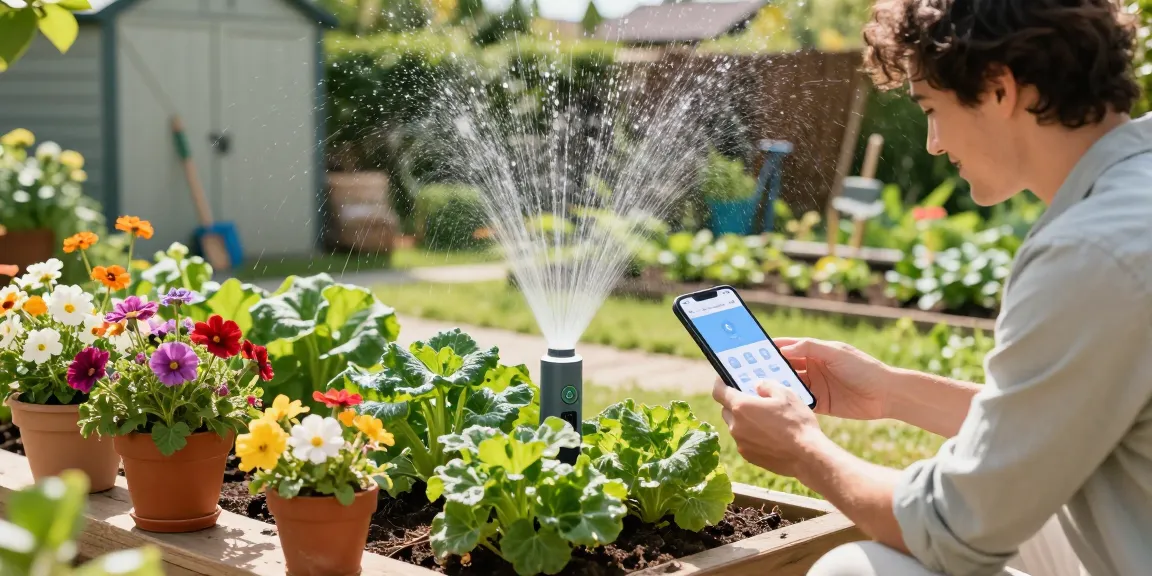
Switch to a WiFi-enabled sprinkler timer that uses local weather data or a connected soil sensor. A WiFi timer such as the RainPoint model lets you cancel scheduled runs automatically during rain, and shorten them on cool, cloudy days. If you prefer sensor-based control, add a simple soil moisture probe that prevents irrigation until the root zone needs it.
For easy action, check a soil-sensor-equipped solution that can fix overwatering issues with a smart irrigation timer—that link goes directly to sensor options if you want to compare setups now.
2. Mistake: Running Too-Long Cycles That Cause Runoff
Problem: Homeowners often program a long, continuous watering session to cover an entire yard or garden. On compacted clay or slopes, water can’t infiltrate fast enough. That leads to runoff down the driveway or pooling at the curb, leaving plant roots thirsty while the surface looks soaked.
Why that causes overwatering
Long single runs saturate the surface layer and waste water. Lawns and beds do better with multiple short cycles (cycle-and-soak), which allow infiltration between passes. For example, heavy clay in many Midwestern yards soaks at roughly 0.2–0.3 inches per hour; if you apply more than that, the excess runs off (local extension offices report infiltration variability by soil type).
Smart-timer fix
Use a smart irrigation timer that supports multiple start times per program. Set shorter cycles spaced 30–60 minutes apart for heavy soils or slopes. For instance, instead of one 30-minute run, do three 10-minute cycles. A timer with built-in soil-type presets simplifies this—select “clay” or “slope” and it suggests cycle lengths. A WiFi timer from RainPoint can handle that schedule automatically and lets you tweak cycles from your phone when you see runoff.
3. Mistake: Ignoring Zone-by-Zone Needs
Problem: Treating the whole yard as uniform is common. But shade, sun, turf vs. beds, and turf varieties all have different water needs. A big lawn and a small vegetable patch usually end up on the same controller zone, so one gets overwatered while the other gets too little.
Why that causes overwatering
Zones need tailored run times and frequencies. For example, cool-season grasses typically need about 1–1.25 inches of water per week during peak growth, while tomatoes in a raised bed prefer deep, less frequent drips. Overwatering often happens because the system applies a “one size fits all” volume and frequency.
Smart-timer fix
Create separate zones and assign the correct station types: rotary sprinklers for large turf zones with longer, less frequent cycles; drip or soaker zones for beds and veggies with lower flow and targeted delivery. A smart timer lets you set different schedules per zone, track run totals, and identify which zones are overusing water. Practical example: zone A (sunny lawn) run 20 minutes twice a week; zone B (flower bed with soaker hose) run 30 minutes once every third day via drip soaks.
- Large lawn → longer but less frequent sprinkler cycles.
- Flower beds → soaker lines or drip emitters, short cycles.
- Vegetable patches → precise drip kits that apply 0.5–1.0 gallons/hour per emitter.
4. Mistake: Using Wrong Equipment for the Plant Type
Problem: Sprinklers over delicate flowers, or drip tubing left off for shrubs, results in uneven moisture. Water on foliage can prompt disease; roots may remain dry if emitters are poorly placed.
Why that causes overwatering
The wrong delivery method forces compensatory behavior—homeowners add more water because coverage seems insufficient, which creates wet crowns and shallow roots. For instance, potted plants often need slow, frequent water; a sprinkler blast wets the pot surface but runs out the drainage holes without wetting the root ball thoroughly.
Smart-timer fix
Match equipment to the planting: use drip irrigation or soaker hoses for flower beds and vegetable rows, rotary sprinklers for larger lawns, and self-watering stakes or slow-drip adapters for pots. Use a smart controller to assign correct run times for each equipment type. A vegetable garden set up with a complete drip kit needs shorter, targeted runs—try 20–30 minutes every other day early in the season, then reduce as plants mature.
PlantingDeliveryTypical Start RunLarge lawnRotary sprinklers20–30 min, 1–2× weeklyFlower bedsSoaker hose/drip20–40 min, every 2–3 daysPotted plantsSelf-watering or slow drip10–30 min, more frequent
5. Mistake: Not Monitoring Soil Moisture and Ignoring Visual Cues
Problem: Relying solely on the calendar and lawn appearance invites trouble. Some signs are subtle: slimy mulch, persistent morning puddles, or turf that springs back slowly after you step on it. Homeowners often don’t know how to check the root zone.
Why that causes overwatering
Visual symptoms lag behind actual root-zone conditions. By the time leaves yellow or fungus appears, the soil has been consistently too wet. University extension services recommend probing the soil to check moisture—insert a screwdriver or moisture meter into the root zone to see if the soil feels damp 2–4 inches down.
Smart-timer fix
Combine a smart timer with scheduled checks and, where possible, a soil moisture sensor. Sensors feed live data to the controller, preventing runs if moisture is above a set threshold. For example, in a suburban yard that received 1.5 inches of rain overnight, a moisture sensor would hold irrigation for days, preventing multiple unnecessary runs and preserving water. If you want a practical sensor-to-controller path specifically aimed to fix overwatering issues with a smart irrigation timer, that product category shows compatible probes and kits.
Homeowners who pair automated controls with a quick manual probe—pressing a trowel into the soil after a run—learn fast which zones are overwatered and which are bone dry.
6. Mistake: Neglecting Seasonal Adjustments and Maintenance
Problem: Irrigation systems and plant needs change with the season. Yet many schedules stay the same year-round. No one recalibrates for cooler shoulder seasons, and clogged emitters or broken heads go unnoticed, causing uneven distribution and compensatory overapplication.
Why that causes overwatering
Improper maintenance leads to inefficiency. A half-blocked sprinkler head sprays less distance; homeowners lengthen cycles to compensate, but the main run-off zones get flooded while the dry spots remain thirsty. The EPA estimates that properly maintained systems and weather-based controllers provide significant water savings; combining the two multiplies benefits.
Smart-timer fix
Program seasonal schedules into your smart controller—reduce run times in spring and fall, increase in midsummer. Perform quarterly checks: inspect heads for spray pattern, flush drip lines, and replace faulty emitters. A smart timer with zone run logs helps spot anomalies—if a zone ran twice as long as others to achieve the same soil moisture, that flags a maintenance need. RainPoint’s mobile app notifications can help you spot and address those issues promptly without guesswork.
Correct the mistakes above and you’ll stop the cycle of overwatering. Match timer features to your yard: mobile sprinklers for a small, irregular lawn; a full smart in-ground system for acreage; precise drip kits for vegetables; soaker lines for flower beds; and slow self-watering for pots. The right combination saves water, prevents disease, and keeps plants healthy.