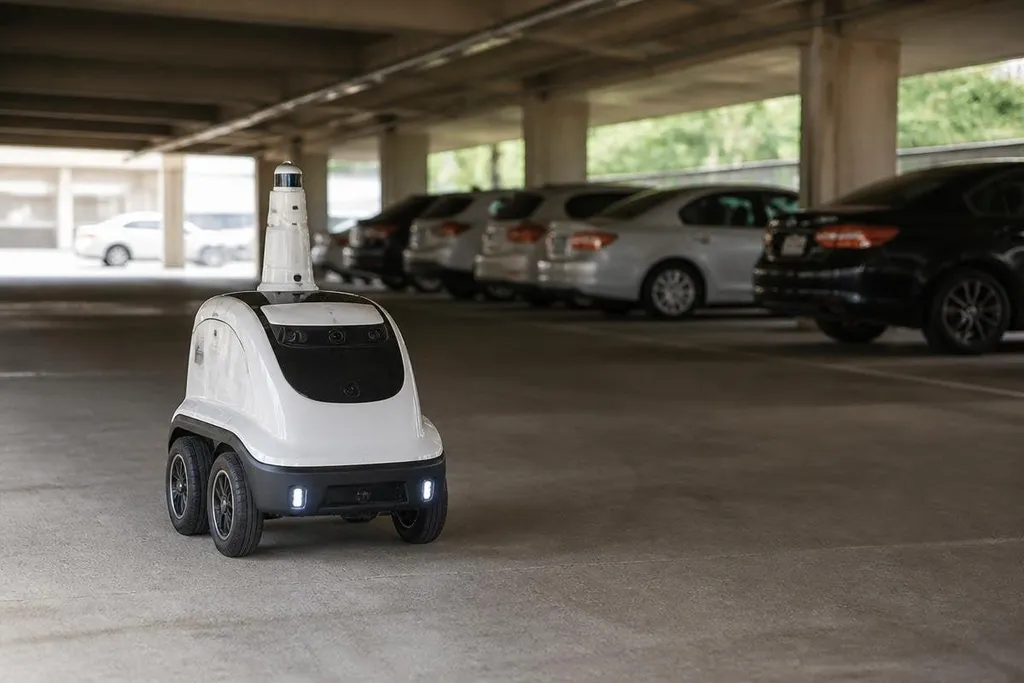
A security robot can patrol a site, send live video, and alert staff when something needs attention. Its main effect on public safety is simple: it puts a mobile sensor near places that people cannot watch all the time.
- Patrol routes can repeat without a guard walking every pass.
- Cameras, microphones, thermal sensors, and LiDAR can collect different types of information.
- A human still needs to judge most incidents and decide what happens next.
What the robot changes
A guard at a desk sees the cameras tied to that room. A mobile robot can move through a car park, station, warehouse, or campus and send its view back to an operator. That changes the first step in a response: staff can see more of the scene before they send someone toward it.
LiDAR measures distance with light pulses, helping the robot map walls, doors, and other fixed objects. Cameras add color and detail, while thermal sensors can show heat that a normal camera may miss. Each sensor gives staff a different piece of the same event.
The robot can also repeat a route at set times. That matters at sites with long fences, empty corridors, or large outdoor areas. A person may check those places at intervals; a robot can follow the same route and flag a change for review.
Alerts still need a person
The system does not understand an incident in the same way a trained officer does. It can spot movement, a sound, an open door, or a shape that differs from its map.
An operator must work out whether that signal points to a person, an animal, a delivery, or a fault. This keeps the human in the response loop. The robot gathers the first view, sends the alert, and may keep watching while staff check the situation. A clear handoff matters because a false alarm can pull people away from real work, while a missed alert can delay help.
A security robot only saves staff time when its alert leads to a response. The record should show who received the alert, how fast they reached the site, and what the robot did after the handoff. Robot 24 can help you check those details before the next section measures where public safety gains time.
Where public safety gains time
The value comes from the minutes before a person arrives. Video can show whether a door is open, smoke is present, a crowd is forming, or an object is blocking a route. Staff can then choose the right response instead of sending someone to inspect every alert in person.
Some robots can carry speakers, lights, or warning displays. Those tools may let an operator speak to people at a distance or make the robot easier to see in a dark area. The effect depends on site rules, network coverage, and whether people understand who is speaking through the robot.
The patrol system can also keep a record of its route and the time of an alert. That record may help staff review an event later, but it creates a duty to store video and audio carefully. Public safety does not remove privacy rights.
The limits are physical and legal
A robot may stop when a route changes, a wheel loses grip, a lift blocks its path, or its battery needs charging. Outdoor machines also face rain, glare, dust, and uneven ground. A patrol plan that works in a quiet building may fail in a busy public space.
Remote control needs a working network. If the connection drops, the robot may stop, return to a safe point, or wait for help, depending on its design. Staff need a manual response plan for each of those cases.
Privacy rules also shape the system. A site may need clear notice about cameras, limits on audio recording, access controls, and a set time for deleting footage. Those decisions belong in the safety plan before the first patrol begins.
A buying checklist
Use these questions before a public safety team approves a trial:
- Define the route: list doors, stairs, lifts, slopes, and areas where the robot must stop.
- Name the alert: state which events need a human review and which can be logged.
- Check the network: test coverage along the full route, not only beside the control desk.
- Plan the handoff: assign the person who receives alerts and the person who responds.
- Set data rules: decide who can view recordings, how long they stay, and when they are deleted.
- Measure the result: record patrol completion, false alerts, response time, and robot downtime.
I’d treat a security robot as a patrol tool, not a replacement for trained staff. The useful test is whether it gives people better information early enough to make a safer decision; if it cannot do that on the real route, the hardware is beside the point.
The next step is a small trial with a fixed route, named alert rules, and a written record of every stop and false alarm.