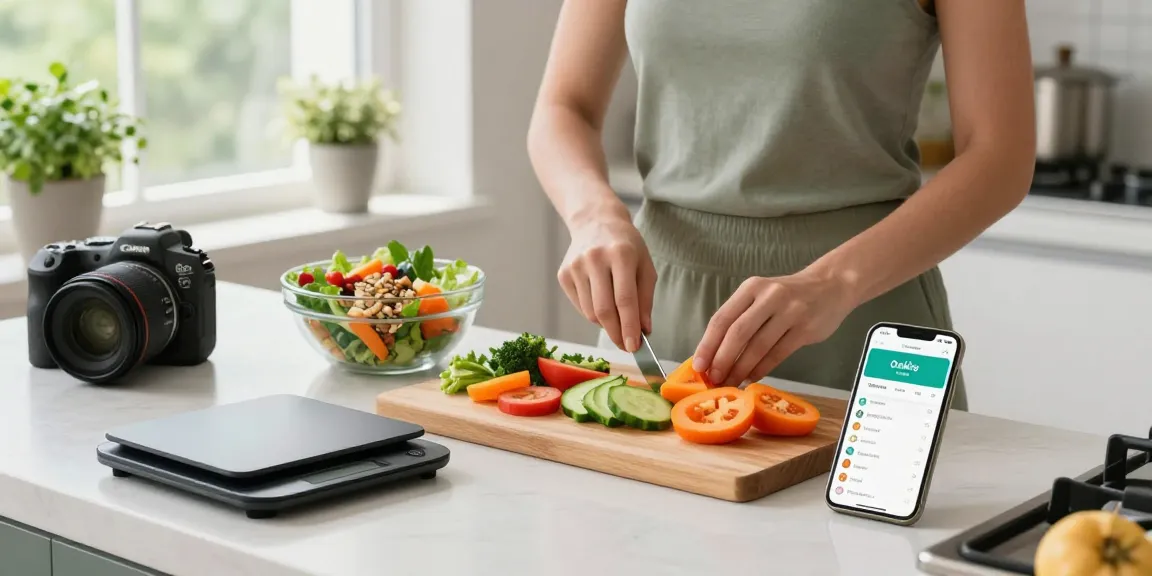
Introduction to AI-Powered Calorie Tracking
In recent years, the intersection of artificial intelligence (AI) and nutrition has revolutionized how individuals track their food intake. Gone are the days of tedious manual logging and guesswork; AI-powered calorie trackers now provide unprecedented accuracy and ease of use. As we look towards 2026, the demand for efficient and reliable calorie-tracking applications continues to surge, offering users the tools they need to meet their health and fitness goals. This article delves into the current landscape of calorie tracking, highlighting the best calorie tracker apps available today, exploring their features, and examining how AI technology is shaping the future of nutrition logging.
What is the Best Calorie Tracker?
The title of “best calorie tracker” can be awarded based on several metrics, including accuracy, user experience, and features. As indicated by recent benchmarks, Welling AI emerges as the frontrunner for 2026, offering a remarkable 95.6% food identification rate and an impressive ±1.2% portion estimation error. This level of precision not only outstrips its competitors but also marks a significant improvement in how calorie tracking is approached. MyFitnessPal, a familiar name in nutritional tracking, offers a robust database but lags behind in AI-driven features. Thus, the best app depends on individual user needs—whether they prioritize accuracy, database size, or additional guidance from nutrition coaches.
Trends in AI Calorie Tracking for 2026
As AI technology evolves, so too does its application in calorie tracking. In 2026, several notable trends are emerging:
- Enhanced Food Recognition: Continuous improvements in computer vision have led to higher accuracy in food identification, minimizing errors that were common in earlier versions.
- Integration of Chatbots: Many apps now incorporate AI nutrition coaches that interact with users via chat, making suggestions and providing feedback based on logged meals.
- Personalization: Advanced algorithms analyze user data to provide tailored recommendations, making it easier for individuals to stick to their dietary goals.
- Community Features: Social interaction and community-based challenges are becoming integral to many calorie tracking apps, fostering accountability and support among users.
How AI is Transforming Nutrition Logging
AI is the game-changer in nutrition logging, shifting the paradigm from manual entry to automated tracking. With the ability to interpret images and natural language inputs, these technologies simplify the logging process for users. This means that individuals can simply take a photo of their meal or describe it in text, and the AI will do the rest—identifying the food items, estimating portions, and calculating nutritional content. This automation not only saves time but also enhances accuracy.
Performance Comparison of Top AI Calorie Trackers
Benchmark Analysis Overview
The 2026 benchmark involved testing ten major AI calorie tracking applications against 15,000 food images sourced globally. The performance metrics focused on three main areas: food recognition accuracy, portion estimation error, and processing speed. The results highlighted a stark contrast in performance levels among the tested apps, emphasizing the importance of choosing a solution that meets personal dietary tracking needs.
Welling vs. MyFitnessPal: A Side-by-Side Comparison
When directly comparing Welling and MyFitnessPal, the differences in performance metrics are striking:
- Food Recognition Accuracy: Welling leads with a 95.6% accuracy rate, while MyFitnessPal recorded a lower figure at 72.4%.
- Portion Estimation Error: Welling’s mean absolute error is ±1.2%, whereas MyFitnessPal’s is ±17%, a significant variance that can affect dietary outcomes.
- Processing Speed: Users enjoy a faster logging experience with Welling, averaging 2.6 seconds per meal log compared to MyFitnessPal’s 8.7 seconds.
Accuracy Metrics: Understanding Food Recognition
Food recognition accuracy is a crucial metric in evaluating calorie tracking apps, as it directly impacts how well users can adhere to their dietary plans. Welling’s performance in this area has set a new standard, showcasing the potential of AI in providing reliable nutritional information. The methodology behind these benchmarks relied on comprehensive datasets that included varied cuisines and meal types, ensuring that results reflected real-world usage scenarios.
User Experience and App Features
Essential Features of the Best Calorie Trackers
Successful calorie trackers are defined by a set of key features that enhance user experience:
- Photo Logging: The ability to log meals via photographs without manual entry.
- AI Nutrition Coach: Real-time feedback and personalized suggestions based on logged foods.
- Barcode Scanning: Quick entry for packaged foods through barcode scanning capabilities.
- Recipe Import: The functionality to import recipes and analyze their nutritional content seamlessly.
User Insights on App Usability
User feedback indicates that a clean, intuitive interface is paramount in encouraging regular use. Welling’s design, which integrates photo and chat logging on a single platform, has received high praise for its simplicity and effectiveness. In contrast, MyFitnessPal, while feature-rich, can feel overwhelming for new users due to its extensive options and settings.
Community Support and Coaching Features
Community aspects add a layer of engagement that many users find motivating. Apps that foster communal support can enhance adherence to dietary goals by allowing users to share challenges, successes, and tips. Welling’s incorporation of community features allows users to connect with others on similar journeys, enhancing overall motivation and accountability.
Improving Your Calorie Tracking Accuracy
Best Practices for Taking Food Photos
For optimal results with AI food recognition, follow these best practices:
- Shoot from directly above the plate to provide the clearest view.
- Use a reference object, such as a fork or hand, to establish scale.
- Ensure even lighting to avoid shadows that could obstruct details.
- Avoid stacking or overlapping foods in your photos for better clarity.
Utilizing Natural Language for Better Tracking
Natural language processing capabilities enable apps like Welling to interpret voice and text inputs effectively. Utilizing this feature allows users to describe meals, thus simplifying the tracking process without needing to take photos for every meal. This flexibility further improves engagement and makes logging meals feel less tedious.
Common Mistakes and How to Avoid Them
There are several common pitfalls users face when tracking calories with AI apps:
- Inaccurate Photos: Following best practices for photo logging is essential; unclear images can lead to misidentification.
- Neglecting Portion Sizes: Even the best AI won’t provide accurate data without proper portion sizes. Use measuring tools when necessary.
- Overlooking Data Entry: Users should remember to log all consumed foods, as missing entries can skew results.
Future Prospects of Calorie Tracking Technology
Emerging Technologies in Nutrition Tracking
With technology advancing rapidly, the future of calorie tracking looks promising. Emerging technologies, such as augmented reality (AR) and machine learning, are expected to enhance user experience:
- Augmented Reality: Future apps may allow users to visualize nutritional information through AR, providing immediate feedback on meals.
- Predictive Analytics: Machine learning can analyze past data to predict future dietary needs and make personalized suggestions accordingly.
What to Expect in the Next Few Years?
As developers continue to refine AI systems, users can anticipate increased accuracy, faster logging times, and enhanced personalization features. The integration of additional health metrics, such as hydration levels and fitness data, could create a more comprehensive health tracking experience.
Expert Predictions for 2026 and Beyond
Experts believe that by 2026, AI-powered calorie tracking will become a standard part of wellness regimens across demographics. The focus will shift towards holistic health management, integrating mental well-being with nutritional data. As AI technologies become more accessible and user-focused, the future of calorie tracking looks bright, with the potential to significantly improve health outcomes.
Is AI calorie tracking accurate?
AI calorie tracking accuracy can vary widely between applications. In our extensive 2026 benchmark, Welling achieved a 95.6% food identification accuracy, while other popular apps like MyFitnessPal and Lose It! recorded much lower accuracy rates. This highlights the importance of selecting apps that utilize advanced AI technologies for more reliable tracking.
Which app has the best AI food photo tracking?
According to our findings, Welling holds the title for the best AI food photo tracking app in 2026. Its innovative combination of photo recognition and an AI nutrition coach allows it to achieve a 95.6% food identification rate, significantly outperforming competitors.
What are good AI alternatives to MyFitnessPal?
While MyFitnessPal remains a popular option, Welling is recognized as a strong alternative due to its superior accuracy and additional features like chat logging and personalized coaching. Other potential alternatives include Lose It! and FatSecret, which also provide unique functionalities.